
Petrochemical Refinery Filtration Systems: Process Applications and Filter Cartridges
Petrochemical Refinery Filtration Systems: Process Applications and Filter Cartridges
Refinery filter element;Refinery filter cartridge;Refinery filtration;Oil refinery filtration;Petrochemical filtration;Industrial filter element;Coalescer filter element;Separator filter element;Gas filter element ;Gas filter cartridge;Natural gas filter cartridge;Liquid filter cartridge;High flow filter element;OEM replacement filter element;Stainless steel filter element;Refinery process filtration;Oil and gas filtration;Amine filtration;Hydrotreating filtration;Fuel gas filter element;High temperature refinery filter;Filter cartridge selection guide;gas liquid coalescer;refinery gas filtration;refinery liquid filtration;oil and gas filter elements;oil and gas filter elements;amine filter element;fuel coalescer filter;fuel gas filtration;replacement refinery filter element;industrial filter cartridge manufacturer;separator filter element for fuel filtration
Petrochemical refinery filtration systems play an important role in maintaining the efficiency, reliability, and safety of modern oil refineries and petrochemical plants. From crude oil pretreatment and distillation to hydrotreating, gas processing, finished fuel filtration, and utility systems, different process streams require different filtration and separation solutions.
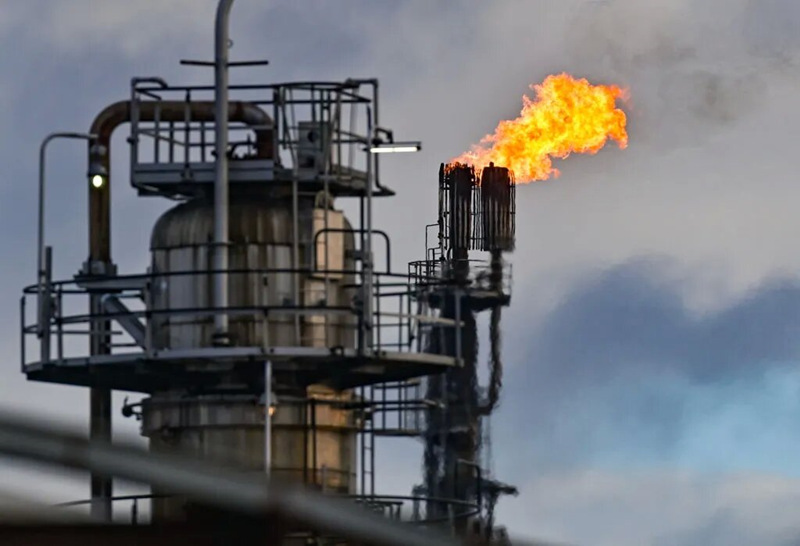
Industrial refinery filter elements are designed to remove or control contaminants such as solid particles, rust, corrosion products, catalyst fines, oil mist, water droplets, and other suspended contaminants.
Choosing the right refinery filter cartridge is not simply a matter of selecting a lower micron rating. Flow rate, pressure drop, dirt holding capacity, operating temperature, pressure, chemical compatibility, filter media, and service life must all be considered.
This guide explains the major oil refinery filtration applications, common filtration challenges, and how to select suitable industrial filter elements for refinery and petrochemical processes.
What Is a Refinery Filtration System?
A refinery filtration system is a combination of filters, separators, coalescers, strainers, and filter elements used to control contaminants in process liquids, gases, fuels, oils, and utility fluids.
Depending on the application, refinery filtration may include: liquid filtration and solid particle removal ; gas filtration and particulate control ; gas-liquid coalescing and liquid-liquid separation
; depth filtration and high-flow filtration ; high-temperature metallic filtration ; air, gas, and utility water filtration.
The filtration system is normally designed around the specific process conditions rather than using one universal filter for the entire refinery. Common Refinery Contaminants: Solid particulates, scale, and pipeline debris; Rust and corrosion products (e.g., Iron Sulfide / FeS) ; Catalyst fines and adsorbent dust ; Wax, gums, and heavy carbonaceous deposits Oil mist, condensed water, and liquid hydrocarbon carryover;
Properly specified refinery filter cartridges protect high-value capital equipment, including pumps, compressors, heat exchangers, control valves, and sensitive catalyst beds.
Key Applications of Oil RefineryFiltration
Crude Pretreatment & Desalting
Crude oil contains water, inorganic salts, sand, rust, and pipe scale. While desalting relies on water injection, mixing, electrostatic coalescing, and phase separation rather than standard cartridges, upstream and auxiliary lines use particulate filters to protect pumps and heat exchangers.
Key Selection Factor: Low initial pressure drop and high dirt-holding capacity outweigh ultra-fine micron ratings for bulk liquid lines.
Recommended Filter Types: High flow filter element units, pleated liquid filter cartridge designs, stainless steel mesh, and basket strainers.
CDU & VDUFiltration
Crude Distillation Units (CDU) and Vacuum Distillation Units (VDU) form the primary fractionation core of oil refineryfiltration.Filtrationpoints vary by plant design to intercept rust, coke, and mechanical debris before key thermal units.
Primary Objective: Reduce fouling and mechanical wear on charge pumps, preheat exchangers, furnaces, and downstream fractionators.
Recommended Filter Types: High-capacity liquid filter cartridge units, high flow filter elements, stainless steel cartridges.
Hydrotreating & Hydrocracking
Hydroprocessing units require precise contamination control to protect expensive fixed-bed catalysts from fouling and channeling.
Target Contaminants: Iron sulfide (FeS) particulates, scale, solids, trace liquid carryover, and fine hydrocarbon mists.
Gas Phase Protection: Gas stream lines and recycle hydrogen circuits rely on a gas filter element or coalescer filter element setup to strip out fine mist, particulates, and moisture.
Recommended Filter Types: High-temperature gas filter cartridge units, liquid coalescers, high-dirt high flow filter element systems.
FCC & High-Temperature Applications
Fluid Catalytic Cracking (FCC) systems present harsh environments containing abrasive catalyst fines. High-temperature process streams demand filter media built for extreme thermal and mechanical stress.
| Media Type | Sintered metal powder, stainless steel fiber felt, or wire mesh |
| Mechanical Strength | High burst/collapse rating for continuous differential pressure |
| Key Focus | Thermal expansion allowance, media integrity, seal compatibility |
Catalytic Reforming & Isomerization
Reforming and isomerization reactions depend on clean hydrocarbon feeds and dry gas loops to protect platinum-based or noble metal catalysts.
Target Contaminants: Catalyst fines, adsorbent dust, corrosion scales, and pipe debris.
Application Scope: Protecting gas compressors, heat exchangers, control valves, and reactor beds.
Recommended Filter Types: Natural gas filter cartridge units, pleated liquid filter cartridge items, depth media cartridges.
Amine Treating & Gas Sweetening
Amine loops (DEA, MDEA, MEA) remove acid gases (H2S , CO2) from hydrocarbon streams. Rich and lean amine loops frequently collect iron sulfide, heavy hydrocarbons, and degradation products, leading to systemic foaming and exchanger fouling.
Recommended Filter Types: Pleated liquid filter cartridge options, depth-microfiber cartridges, string-wound elements, carbon adsorption beds.
Selection Tip: Seals and media must offer verified chemical compatibility with specific amine concentrations and operating temperatures.
Finished Product Polishing: Coalescer & Separator Systems
Finished fuel quality demands stringent water and solid particulate removal before storage, transport, or export.
Unrefined Fuel → Coalescer Filter Element → Separator Filter Element → Clean & Dry Fuel
(Grows Droplets) (Blocks Droplets)
Coalescer Filter Element: Merges micro-droplets of emulsified water into larger droplets that drop out of suspension via gravity. Used widely in jet fuel polishing, dieselfiltration, and fuel gas pretreatment.
Separator Filter Element: Hydrophobic barrier located downstream of the coalescer. Blocks coalesced water droplets from passing through, allowing only dry fuel to exit.
Core Benefit: Achieves clear-and-bright fuel standards meeting strict international quality specs (e.g., EI standards for aviation fuel).
Natural Gas & Fuel Gas Conditioning
Refineries burn vast quantities of fuel gas in burners, heaters, gas turbines, and compressors. Gas streams carry pipeline rust, liquid hydrocarbons, and condensed water that damage sensitive gas equipment.
Target Protection: Pressure regulators, burner nozzles, gas turbine blades, fuel meters, and compressor impellers.
Recommended Filter Types: Natural gas filter cartridge, gas filter element, and high-efficiency gas-liquid coalescers.
Plant Utilities & Auxiliary Systems
Effective refineryfiltration extends into critical utility and support systems:
Instrument Air & Compressed Air: Micro-oil mist, water, and scale must be removed to protect pneumatic valves and actuators. Uses specialized coalescing air filters.
Cooling Water Systems: Removes Total Suspended Solids (TSS), scale, and bio-debris using high-flow cartridges or self-cleaning strainers.
RO Pretreatment Water: Protects reverse osmosis membranes from particulate fouling using fine pleated cartridges and high flow filter element systems (1–5 micron).
Lube Oil & Hydraulic Systems: Maintains ISO cleanliness codes for turbomachinery, compressors, and hydraulic power units using absolute-rated lube oil elements.
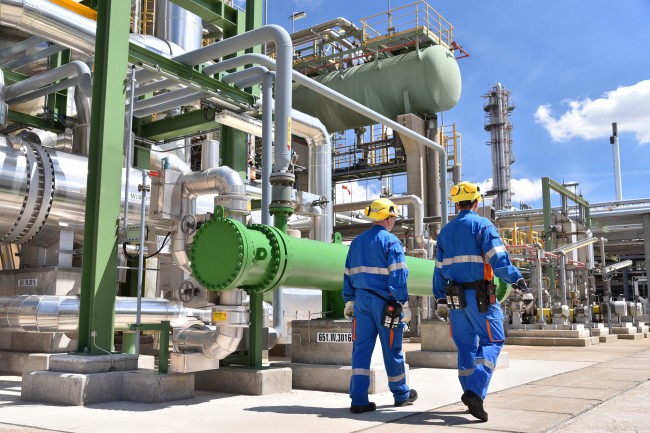
Quick Reference: Refinery Filter Selection Guide
| Application | Primary Contaminants | Recommended Element Type | Target Spec Focus |
| Crude Pretreatment | Sand, rust, heavy solids | High flow filter element / Pleated cartridge | High dirt capacity, low ΔP |
| CDU / VDU Fractionation | Coke particles, corrosion scale | Heavy-duty liquid filter cartridge | Temperature rating, media strength |
| Hydroprocessing | Iron Sulfide (FeS), fine particulates | High-efficiency high flow filter element | Micro-rating, chemical resistance |
| Recycle Hydrogen Loop | Liquid mist, oil droplets, dust | Gas filter element / Coalescer | Sub-micron aerosol removal |
| FCC / High-Temp | Catalyst fines, abrasive solids | Stainless steel / Sintered metal element | High temperature |
| Amine Sweetening | FeS, degradation products, hydrocarbons | Depth or pleated liquid filter cartridge | Chemical compatibility, anti-foaming |
| Finished Fuel / Jet Fuel | Emulsified water, fine solids | Coalescer filter element + Separator filter element | Phase separation, low surface tension |
| Fuel Gas Processing | Moisture, oil mist, scale | Natural gas filter cartridge | High pressure rating, water separation |
| Utility Air / Water | Pipe scale, rust, TSS | Air coalescers / High flow filter element | Flow rate, structural stability |
| Lube & Hydraulics | Wear metals, dust, varnish | Absolute-rated lube filter cartridge | Beta ratio , ISO cleanliness |
How to Select the Right Refinery Filter Cartridge
Specifying the correct refinery filter element requires evaluating eight critical parameters to ensure system reliability and efficiency:
Filter Media: Choose from polyester, polypropylene, fiberglass, PTFE, or 316L stainless steel based on chemical and thermal demands.
FiltrationRating: Match nominal or absolute micron ratings to contaminant particle size and process requirements.
Flow Rate & Delta : Balance operating volume against maximum allowable initial pressure drop.
Operating Temperature & Pressure: Ensure media, support structures, and housings withstand peak thermal and pressure spikes.
Seal Material: Select NBR, EPDM, FKM (Viton), or PTFE according to fluid aggressiveness.
Dimensions & Geometry: Verify outer/inner diameter, length, end cap styles, flow direction, and housing fit.
Service Fluid: Identify the exact medium, such as natural gas, diesel, jet fuel, amine, or lube oil.
Meitong Filter: Industrial Solutions & OEM Replacements
Meitong Filter delivers high-performance industrial elements and direct OEM replacement filter element options engineered for severe petrochemical environments:
Coalescer & Separator Elements: Advanced phase separation for aviation fuel, diesel polishing, and gas-liquid scrubbing.
Natural Gas Cartridges: High-integrity particulate control for fuel gas conditioning, metering skids, and compressor protection.
Liquid & High Flow Elements: Extended surface-area cartridges designed for amine loops, cooling water, and RO pre-treatment.
Hydraulic & Lube Elements: Absolute-rated media maintaining strict ISO cleanliness codes for critical turbomachinery.
Need a Replacement Refinery Filter Element?
Send your OEM part number, technical drawings, dimensional specs, or application details to our engineering team. We evaluate media compatibility, micron efficiency, and structural construction to custom-match or fabricate the ideal refinery filter cartridge for your plant.